Aluminum
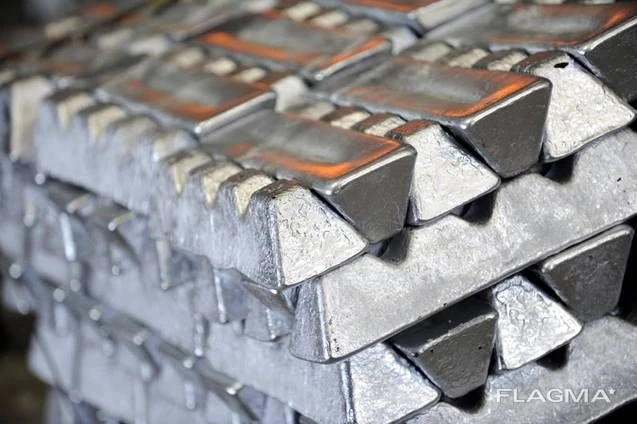
Aluminum (symbol: Al) is a chemical element in the boron group
with the atomic number 13. It is a silvery-white, lightweight, and soft metal with
excellent corrosion resistance and thermal conductivity. Aluminum is the third most
abundant element (after oxygen and silicon) and the most abundant metal in the Earth's
crust, making up about 8% of the crust by weight.
Properties :
- Lightweight: Aluminum has a low density, about one-third that of
steel, making it ideal for applications where weight reduction is crucial, such as
aerospace and automotive industries.
- Corrosion Resistance: Aluminum forms a thin, protective oxide layer
when exposed to air, providing excellent corrosion resistance, especially in marine
and corrosive environments.
- Conductivity: Aluminum is an excellent conductor of heat and
electricity, making it widely used in electrical transmission lines, heat
exchangers, and electronic devices.
- Malleability and Ductility: Aluminum is highly malleable and
ductile, allowing it to be easily formed into various shapes and sizes through
processes such as rolling, extrusion, and forging.
- Reflectivity: Aluminum has high reflectivity for both visible light
and thermal radiation, making it suitable for applications such as mirrors, solar
panels, and heat shielding.
- Recyclability: Aluminum is 100% recyclable without any loss of
quality, and recycling aluminum requires only a fraction of the energy needed to
produce primary aluminum, making it an environmentally friendly material
Applications:
- Transportation: Aluminum is extensively used in the automotive,
aerospace, and marine industries for lightweight structural components, such as body
panels, chassis, wheels, and aircraft fuselages, to improve fuel efficiency and
performance.
- Packaging: Aluminum is widely used for packaging materials,
including cans, foils, and containers, due to its lightweight, corrosion resistance,
and ability to preserve the freshness of food and beverages.
- Construction: Aluminum is used in construction for windows, doors,
roofing, curtain walls, and structural components due to its durability, corrosion
resistance, and ease of fabrication.
- Electrical Transmission: Aluminum conductors are used in electrical
transmission lines and power cables due to their high conductivity, lightweight, and
cost-effectiveness compared to copper.
- Consumer Goods: Aluminum is used in various consumer products,
including cookware, utensils, furniture, and sporting equipment, due to its
lightweight, durability, and aesthetic appeal.
- Industrial Applications: Aluminum is used in a wide range of
industrial applications, including heat exchangers, chemical processing equipment,
machinery components, and storage tanks, due to its corrosion resistance and thermal
conductivity.
Aluminum Alloys:
Aluminum is often alloyed with other elements to enhance its properties for specific
applications.
Common alloying elements include copper, silicon, magnesium, manganese, and zinc.
Aluminum alloys exhibit a wide range of mechanical properties, corrosion resistance, and
workability, making them suitable for diverse applications ranging from aerospace to
automotive industries.
Aluminum's unique combination of properties, including lightweight, corrosion
resistance, conductivity, and recyclability, makes it one of the most versatile and
widely used metals in the world, impacting almost every aspect of modern life.
Chemical Compositions :
| Alloy |
Chemical Composition (%) |
Mechanical Properties |
| Alloy 2024 |
Copper: 3.8-4.9 |
Tensile Strength: 470 MPa<br>Yield
Strength: 325 MPa<br>Elongation:
20%<br>Hardness (Brinell): 120 |
|
Manganese: 0.3-0.9 |
|
|
Magnesium: 1.2-1.8 |
|
|
Silicon: 0.5 |
|
|
Zinc: 0.25 |
|
| Alloy 6061 |
Magnesium: 0.8-1.2 |
Tensile Strength: 310 MPa<br>Yield
Strength: 276 MPa<br>Elongation:
12%<br>Hardness (Brinell): 95 |
|
Silicon: 0.4-0.8 |
|
|
Iron: 0.7 |
|
|
Copper: 0.15-0.4 |
|
|
Zinc: 0.25 |
|
|
Titanium: 0.15 |
|
| Alloy 7075 |
Zinc: 5.1-6.1 |
Tensile Strength: 570 MPa<br>Yield
Strength: 503 MPa<br>Elongation:
11%<br>Hardness (Brinell): 150 |
|
Magnesium: 2.1-2.9 |
|
|
Copper: 1.2-2.0 |
|
|
Chromium: 0.18-0.28 |
|
|
Others: 0.2 max |
|
| Alloy 5083 |
Magnesium: 4.0-4.9 |
Tensile Strength: 330 MPa<br>Yield
Strength: 240 MPa<br>Elongation:
12%<br>Hardness (Brinell): 75 |
|
Manganese: 0.40 |
|
|
Chromium: 0.05-0.25 |
|
|
Iron: 0.4 |
|
|
Others: 0.15 max |
|
Notes :
- Tensile strength is the maximum amount of tensile (stretching) stress a material can
withstand before breaking.
- Yield strength is the amount of stress at which a material begins to deform
plastically.
- Elongation is the percentage increase in length of a material before it fractures.
- Hardness (Brinell) is a measure of a material's resistance to indentation or
scratching.

 Pipes &
Tubes
Pipes &
Tubes Sheets
&
Plates
Sheets
&
Plates
 Flanges
 Buttweld
Fittings
Buttweld
Fittings
 Socket
Weld & Threaded Fittings
Socket
Weld & Threaded Fittings
 Fasteners